- 작성일 2026.04.01
- 작성자 고려대학교 세종캠퍼스
- 조회수 2
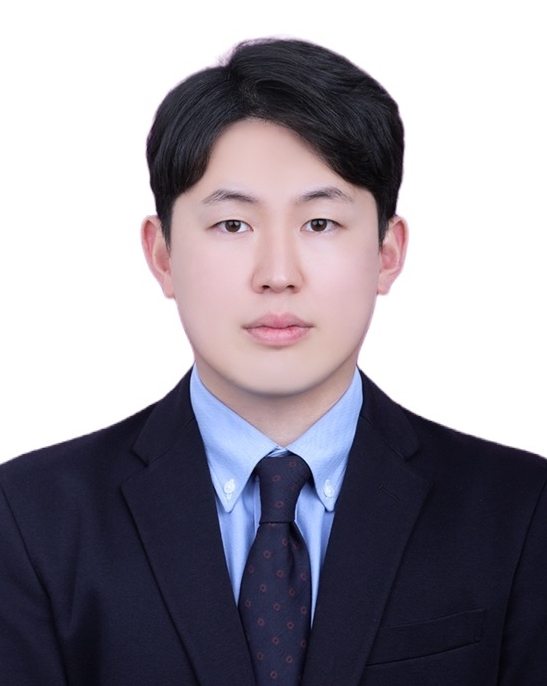
On March 10, Korea University Sejong Campus announced that the research team led by Prof. Lee Hyungeun of the Department of AI Semiconductor Engineering has been selected for the payload competition of Space Verification Satellite No. 3 under the ‘Korean Component Space Verification Support Project’ promoted by the Korea AeroSpace Administration (KASA).
This project aims to support domestic institutions in securing space heritage for electrical and electronic components and semiconductor devices developed in Korea. It is being carried out by the Korea Aerospace Research Institute (KARI) under KASA. From 2024, KASA plans to invest a total of 12 billion won over four years to promote a program that mounts domestically developed components on a 12U CubeSat platform (1U = 10 cm × 10 cm × 10 cm) to verify their performance in an actual space environment.
A total of 24 institutions applied for this competition, and 9 institutions were finally selected. Fifteen types of components will be given the opportunity to be verified in orbit.
Among them, Prof. Lee’s research team was selected for a project to design and manufacture a payload using a ‘9-megapixel CMOS image sensor for satellite applications,’ jointly developed with Cosmic Vision Technology. The payload will be mounted on Space Verification Satellite No. 3 to undergo performance validation in the space environment. The selected components are scheduled to be launched into space via the 6th launch of the Nuri rocket next year.
Companies and research institutions were also selected for this project. Major payloads include radiation-resistant memory devices by SK hynix; materials and components for low Earth orbit satellites by LG Electronics; an AI-based ultra-small Hall thruster control and atomic oxygen ion current measurement module by Cosmobee; domestically produced polyimide components for multilayer insulation by Daelim; an intelligent processor module test device for small exploration rovers by AP Satellite; and non-flammable special electrolyte batteries by Ilchem. From academia and research institutes, seven localized semiconductor technologies from ETRI and a power semiconductor-based DC/DC converter from Hanbat National University were also selected.
Relatedly, Prof. Lee Hyungeun is currently conducting research and development on CMOS image sensors and vision sensor systems at Korea University Sejong Campus. He is also focusing on developing computational imaging systems for embedding AI algorithms.